An apprentice is a worker who gains expertise in a skilled trade through structured, supervised on-the-job training combined with classroom instruction. Apprentices are active members of the workforce, earning wages while developing valuable skills. Apprenticeship programs typically last up to five years. Upon completion, an apprentice becomes a journeyperson, fully qualified to perform the trade and receive full compensation for their expertise. Apprenticeships offer a pathway to becoming a skilled tradesperson—a vital “natural resource” for the industry. Craftspeople turn the ideas and theories of engineers and scientists into practical, tangible results in the field.
why participate in an apprenticeship?
An apprenticeship is comprehensive career preparation. It not only provides training for a specific role but also teaches a broad set of related skills, preparing you for opportunities across the entire industry. After completing your apprenticeship, you’ll have the flexibility to work in the electrical field anywhere in the country, thanks to the skills you’ve developed. Apprenticeships also help you build personal strengths and independent decision-making. Both labor and management see apprenticeships as a foundation for developing future supervisors, managers, and industry leaders.
what does it mean to be apprentice?
Becoming an apprentice typically involves signing a formal agreement known as an indenture. This apprenticeship agreement is a legally recognized contract that outlines the responsibilities of all parties involved: the employer, the union, the registering agency, and the apprentice. The indenture specifies key details, including:
The specific trade to be learned
The required number of on-the-job training hours
The required number of hours for related classroom instruction
4-year Program Description
Those selected for and participating in this program will attend school for 720 hours (180 hours per year) and must successfully complete all related training. Subjects include DC Theory, AC Theory, Blueprint Reading, Motor Control, Conduit Bending, National Electrical Code, Safety, and many more.
They also must accumulate 8,000 hours of on-the-job training while working for our signatory contractors. This will be done under the supervision of qualified journeymen and master electricians. During this time your wages will be based upon a percentage of the Journeyman scale, starting at 45% as a new 1st year and rising to 80% as a 4th-year apprentice as you gain experience and training. Those completing this program will attain the status of Journeyman Inside Wireman.
More specific details can be found in our ‘THE ROAD TO INSIDE JOURNEYMAN’ document.
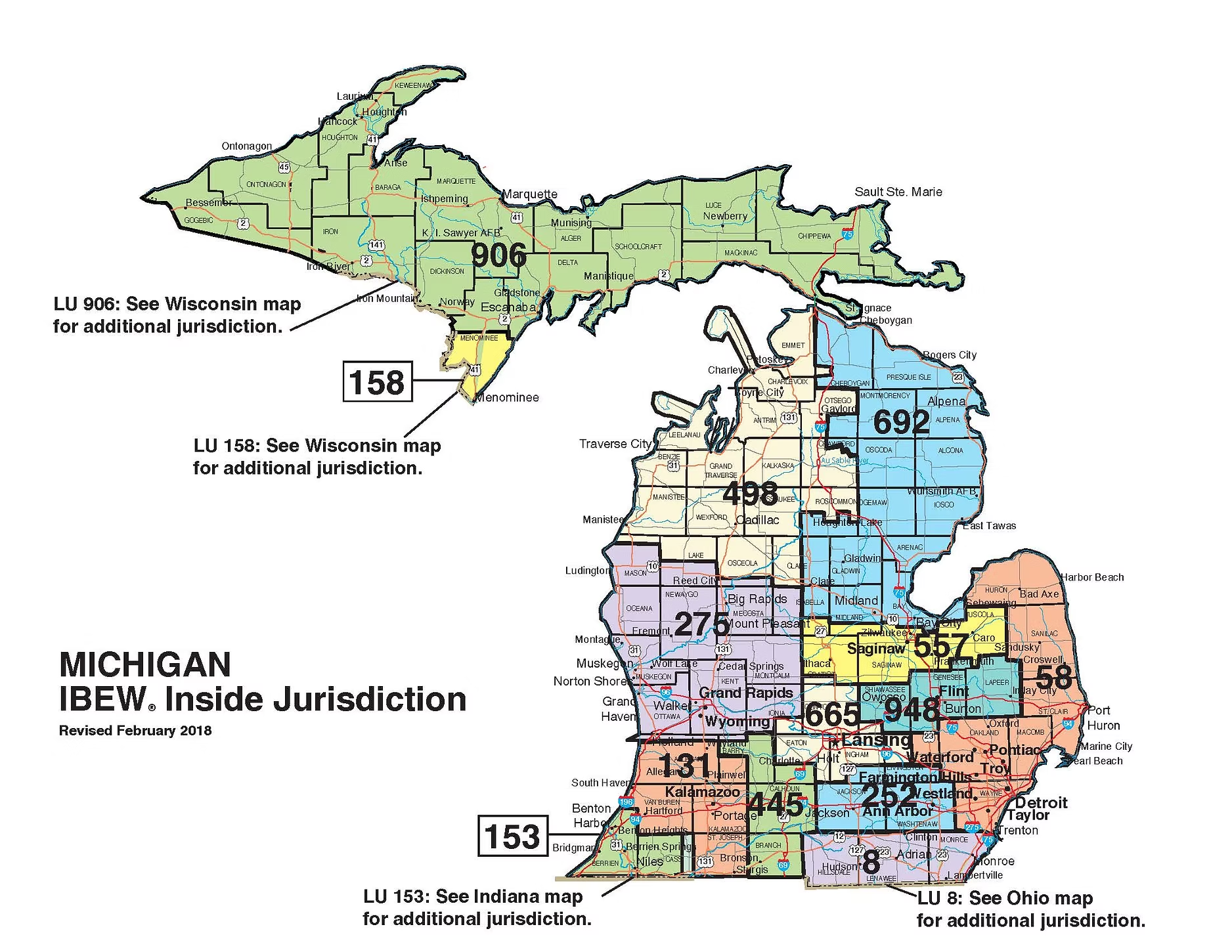
JURISDICTION Local 131’s jurisdiction covers four counties:
Allegan
Van Buren
Kalamazoo
St. Joseph
Do you partner with the kalamazoo promise?
Yes! We are proud to partner with the Kalamazoo Promise and look forward to continue our providing opportunities to the students they serve.
HOW DO I APPLY?
After you’ve reviewed the information about our program and our FAQs, simply click the Apply Now button to take the next step!
Are there any tips on filling out the pef?
Yes! To ensure you receive credit for each section of the PEF you will be required to submit supporting documentation.
Personal experience form & letters of recommendation
The Personal Experience Form (PEF) allows the JATC to gain an understanding of an applicants school and work experience related to successful performance in the classroom and on the job. The PEF is used in the place of an interview. It is a systematic way to measure motivation, work experience, and educational background. Letters of Recommendation can be submitted along with the PEF. It is important that you upload ALL supporting documents in this section.
APTITUDE TEST
Once it is determined that you meet the basic requirements listed above and upon completion of the PEF within 2 weeks, you will be scheduled to take our aptitude test, which covers 5 areas.
Numerical Computation – Measures the ability to perform basic arithmetic operations.
Reading – Measures the ability to understand the meaning of written passages.
Mechanical Reasoning – Measures the ability to understand basic mechanical relationships.
Numerical Reasoning – Measures the ability to find a pattern in a series of numbers and apply a rule to complete the series.
Paper Folding– Measures the ability to visualize a 3-dimensional figure in 2-dimensional space.
THE SELECTION PROCESS
The Kalamazoo ETA Committee is responsible for selecting apprentices for the Electrical Industry. This Committee is staffed by representatives from both management and labor organizations. They look for individuals who exhibit strong character, aptitude, motivation, and personality traits suited for success in the electrical trade. Apprentice candidates are considered under equal employment opportunity guidelines, required to participate in standardized testing, and are personally interviewed by the KETA. The Committee’s goal is to select candidates who demonstrate reliability and a genuine desire to succeed.
Selection may not occur immediately following your interview with the Apprenticeship Committee, and it is common for several months to pass before a decision is made. If you are chosen for the apprenticeship program, you will be notified via email and phone. Class sizes vary depending on the needs of our contractors.